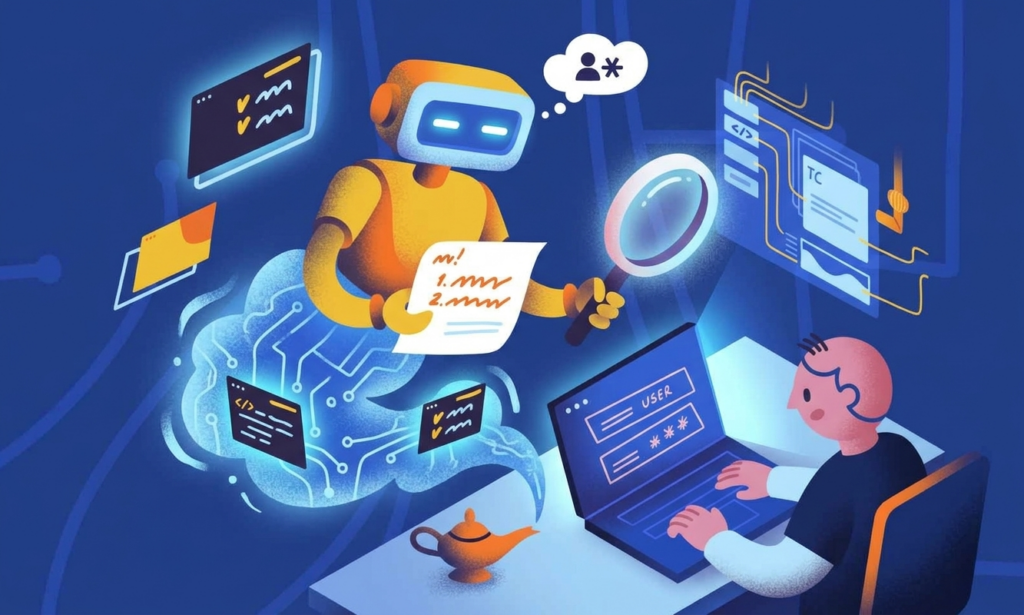
Full recording of 2m2x Ep. 140, AI Is Not Magic: Tools & Architecture Part 2
AI’s limits are real—but so are the solutions. In Part 2, we move beyond the hype and into the architecture, tools, and best practices that turn demos into production systems. From RAG and agentic workflows to human-in-the-loop design, this episode breaks down what it actually takes to build AI that works in the real world.
In the last episode, we talked about the natural limits of AI, why it’s probabilistic, why the demo is never the whole story, and why edge cases are what separate a compelling proof-of-concept from a production-ready solution.
Now let’s talk about the real magic.
There are tools, techniques, and architectural frameworks that can take you well beyond those limits. But before we get into them, there’s something important to address: not all AI practitioners are created equal.
The Snake Oil Problem
Because generative AI is now so accessible, a new wave of providers has emerged claiming AI expertise. The warning signs are consistent: they build production systems in rapid prototyping tools never designed for scale, they dump massive document repositories into a system and expect techniques that work for megabytes to perform the same way at gigabytes, they write basic prompts and expect them to handle complex real-world situations, and they design poor user experiences that place too much cognitive load on the people actually using the product.
When all you have is a hammer, everything looks like a nail. Low-end providers apply the same generic approach to every problem — and the result is applications that demo well and fall apart in production.
Best Practices Are Not Optional
Just as software engineering has foundational principles — object-oriented design, separation of concerns, normalization and denormalization — AI architecture has its own set of best practices. The difference between an exciting demo and a real-world solution is knowing which tools to use, when, and why.
The techniques that matter most right now include:
- RAG vs. Graph RAG — knowing when standard retrieval-augmented generation is sufficient versus when a graph-based approach is needed for complex, interconnected knowledge
- MCP (Model Context Protocol) — enabling AI models to interact with external tools and services reliably
- Private LLMs — deploying models in controlled, secure environments when data sensitivity requires it
- Human-in-the-loop — designing systems that know when to escalate to a human rather than guessing
- Agentic architecture — building AI that can reason, plan, and take multi-step actions autonomously
- Automated evaluation — systematically testing AI outputs so quality doesn’t degrade over time
- Streaming, voice, and text-to-speech — choosing the right interaction modality for the use case
- Prompt engineering — crafting inputs that consistently produce reliable, high-quality outputs
- Supervised vs. unsupervised learning — understanding which training approach fits the problem
Experience Is the Differentiator
Knowing these terms is a starting point. Knowing when and how to apply them, in combination, at scale, for a specific business context, is where genuine expertise lives. Every business case is different. The right architecture for a customer support AI is not the same as the right architecture for a document intelligence system or a real-time operations assistant.
That judgment, built from experience, not just familiarity with the tools, is what separates a production-grade AI solution from an expensive prototype.
This is Part 2 of a two-part series. In Part 1, we covered the natural limits of AI and why understanding them is essential before deploying any solution.